 Boost!
Check the PHP version
kumaneko requires PHP 8.2 or later. The following steps also assume PHP 8.2 or later.
kumaneko system requirements +Imports received email from a specified mail account, so you can manage email correspondence in one place with your kumaneko apps.
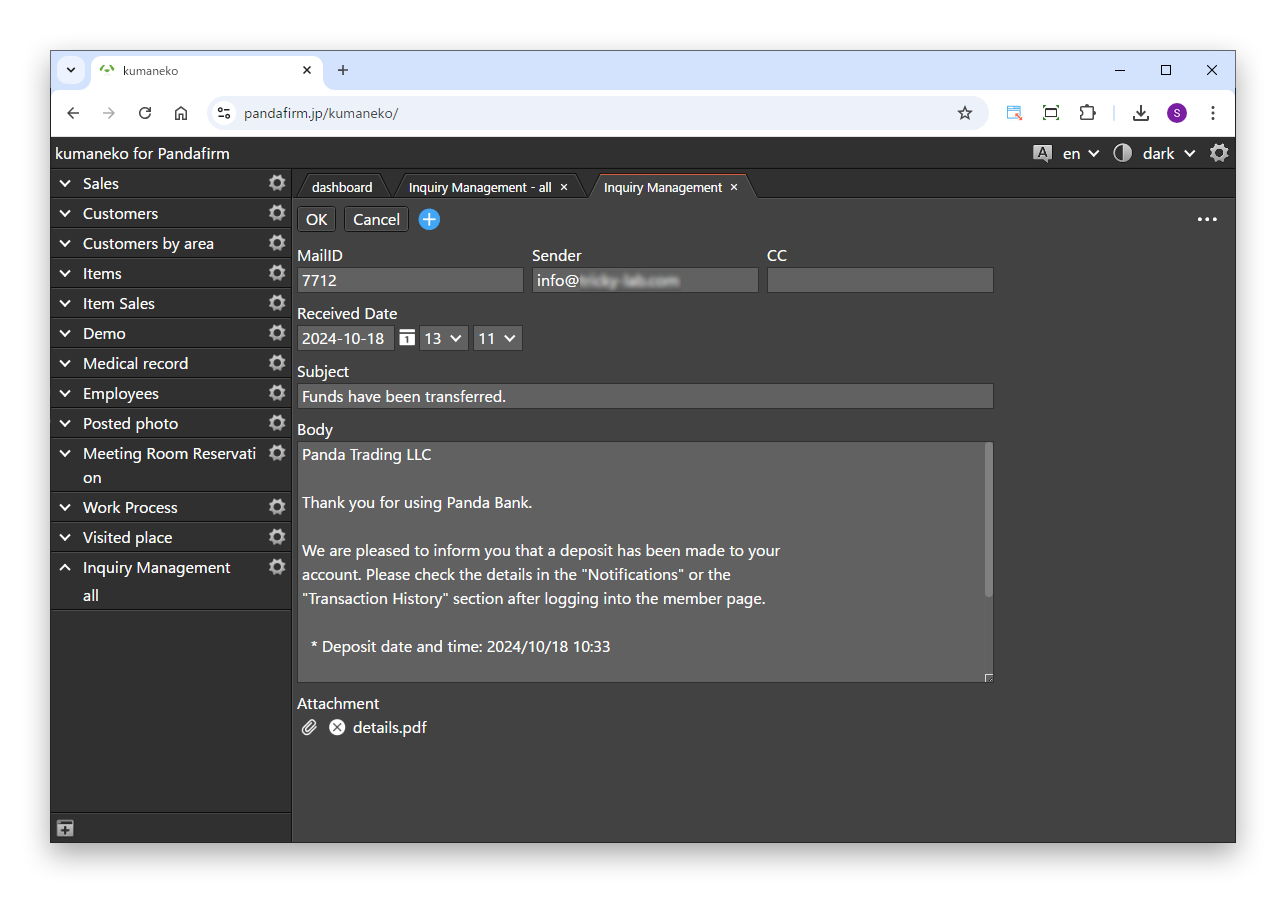
kumaneko requires PHP 8.2 or later. The following steps also assume PHP 8.2 or later.
kumaneko system requirements +This plugin uses the PHP imap module to import email. If the imap module is not on your server, install it with the following steps for your PHP version.
For PHP 8.2 and 8.3, install it from a package. Run lines 1–2 on Ubuntu or Debian, or line 3 on RHEL, AlmaLinux or Rocky Linux.
sudo apt-get update
sudo apt-get install php-imap
sudo dnf install php-imap
From PHP 8.4, the imap module was removed from PHP itself, so install it from PECL instead of a package.
For PHP 8.4 and later, install the required libraries, then install the imap module with PECL. The following commands are an example for Ubuntu or Debian.
sudo apt-get install php-pear php-dev libc-client-dev libkrb5-dev
sudo pecl install imap
After installing, check that php.ini contains the following line and add it if it does not. If you installed from a package on Ubuntu or Debian, you can also enable it with phpenmod.
extension=imapThe location of php.ini depends on your PHP version and on whether you use Apache or PHP-FPM. php --ini shows the configuration file for the command line, so check the php.ini loaded by your web server with "Loaded Configuration File" in phpinfo().
Finally, restart the web server. Run line 1 for Apache, or lines 2–3 for nginx and PHP-FPM.
sudo systemctl restart apache2
sudo systemctl restart php8.3-fpm
sudo systemctl restart nginx
Replace "8.3" in php8.3-fpm with your PHP version.
For PHP 8.2 and 8.3, open php.ini and remove the ";" at the start of the following line to enable the imap module.
;extension=imapFor PHP 8.4 and later, get php_imap.dll from the Windows version of PECL, place it in the PHP ext folder, and add "extension=imap" to php.ini.
Next, check that extension_dir in php.ini points to the folder containing the extension modules.
extension_dir = "ext"The imap module uses the OpenSSL files libcrypto-3-x64.dll and libssl-3-x64.dll in the PHP folder. If the PHP folder is not in the PATH environment variable, the imap module is not loaded.
Finally, restart the web server (Apache or IIS).
Boost! plugins are configured and downloaded in the console. If you have not opened your console yet, please open it first.
How to open the console +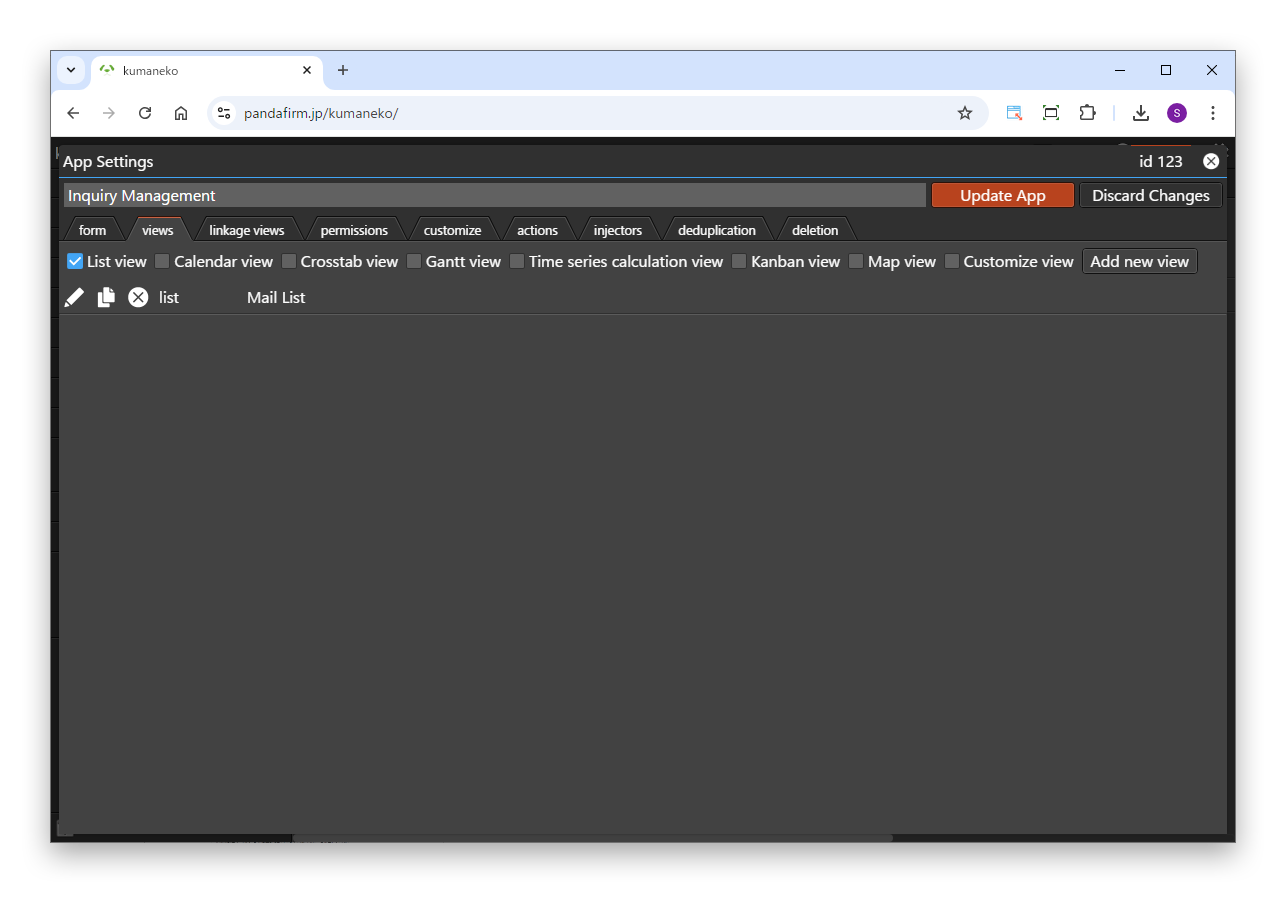
This plugin runs in a read-only list view. If you want to use a view other than the standard "All" view, create a read-only list view.
Using the list view +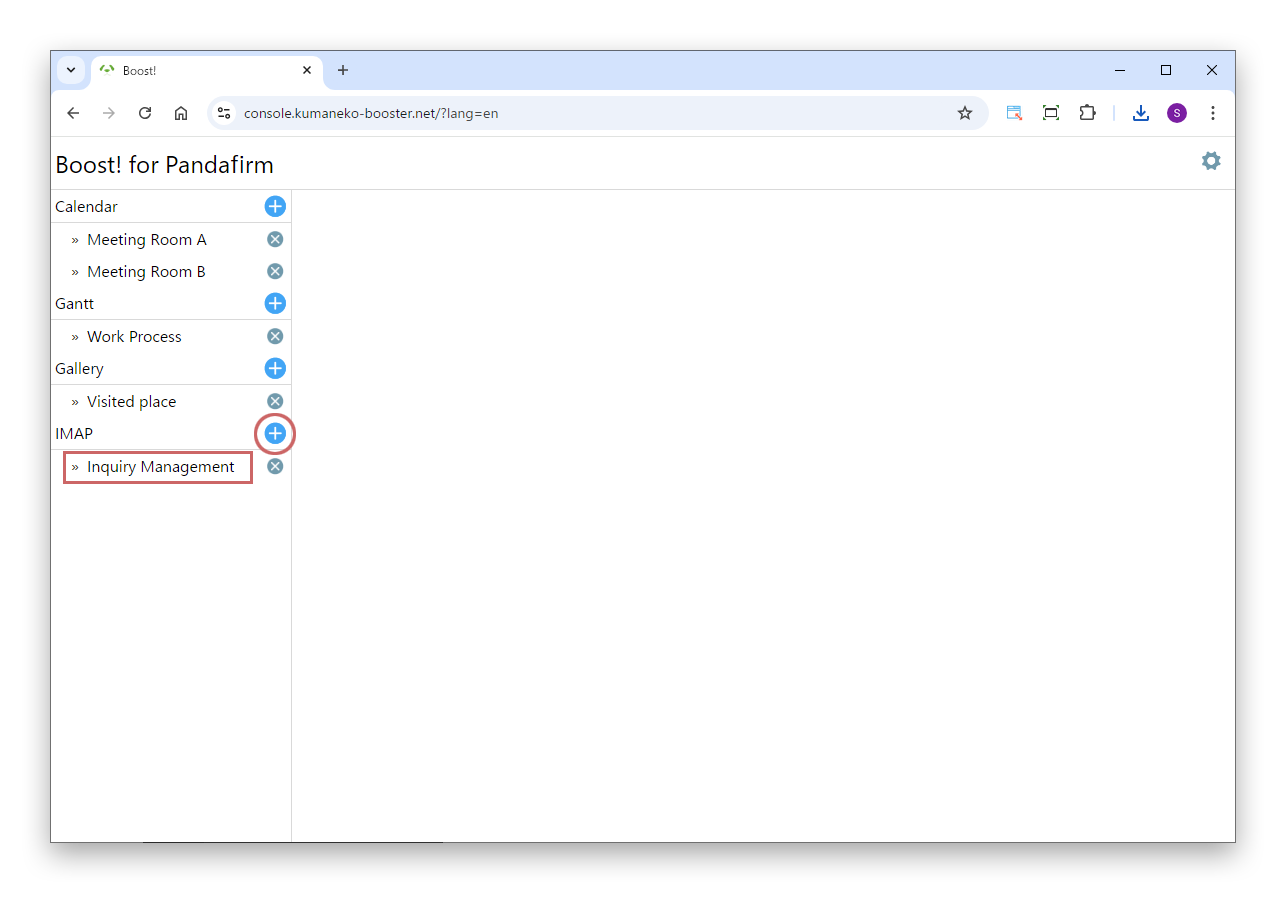
In the console, click the add button on the right (round red frame) to add a new setting, or click the setting name (square red frame) to edit an existing one.
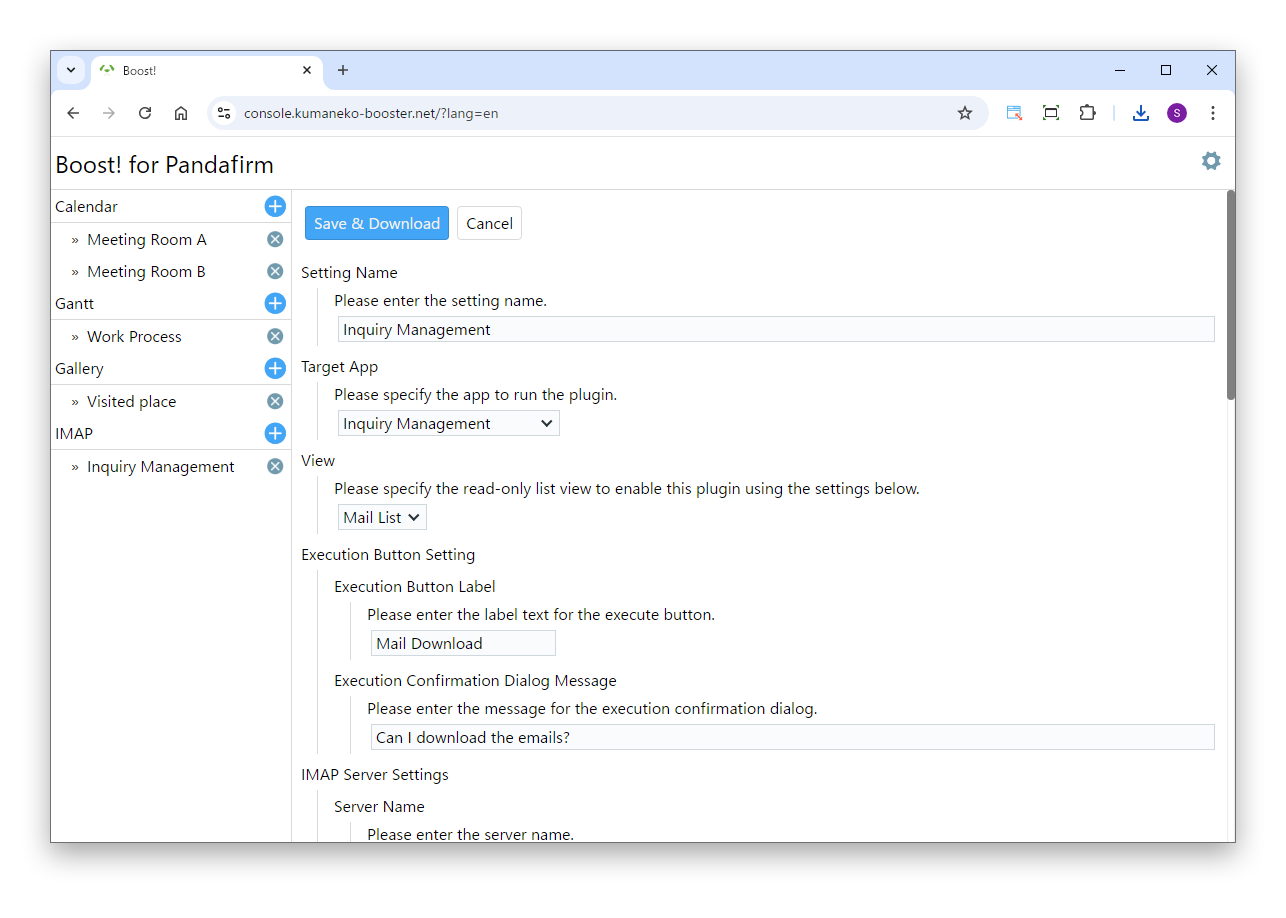
When the settings screen appears, specify the following items.
Click the "Save & Download" button and import the downloaded program into kumaneko. The steps are explained in "Getting Started" on the top page.
See Getting Started +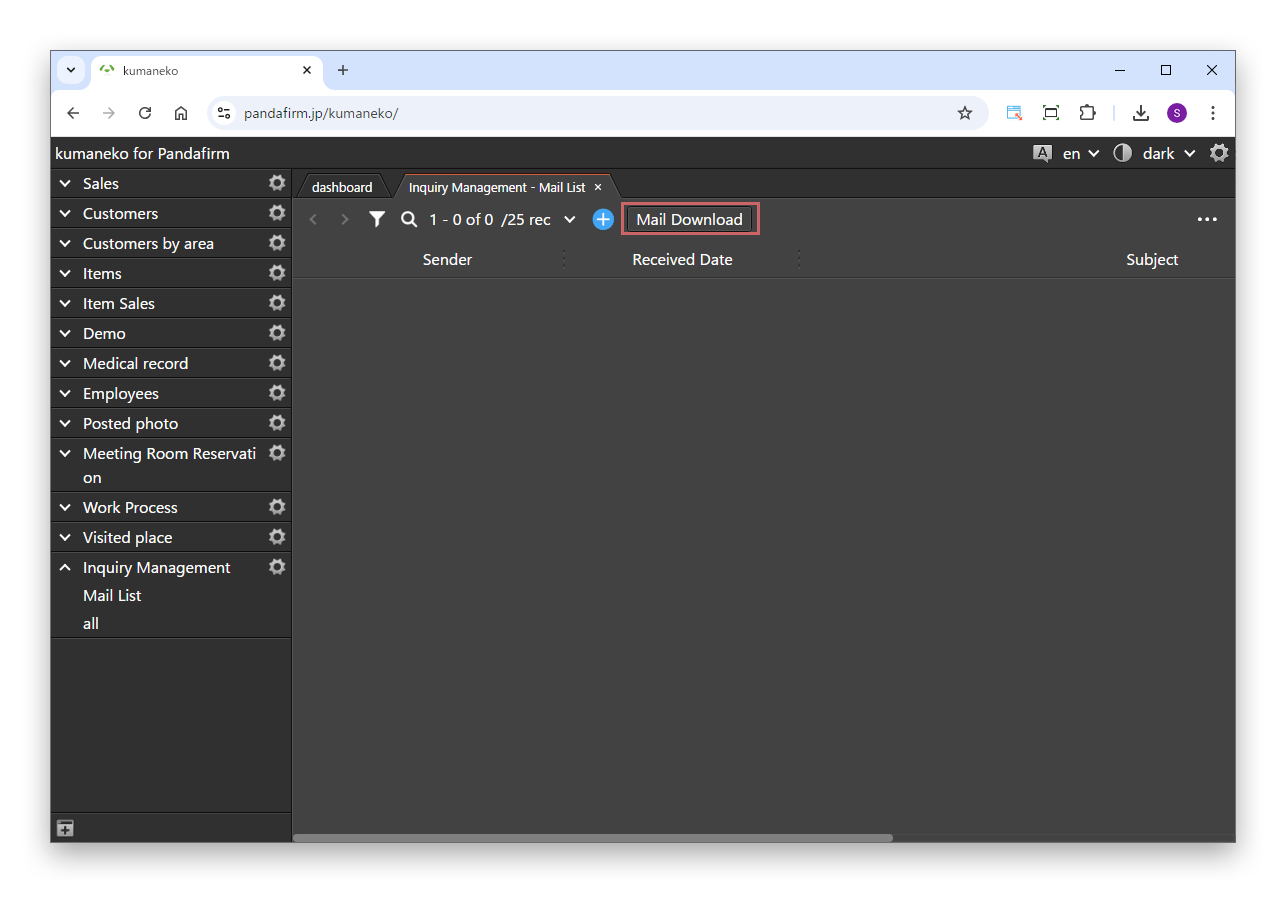
Open the list view specified on the settings screen, and the button for importing email is displayed.
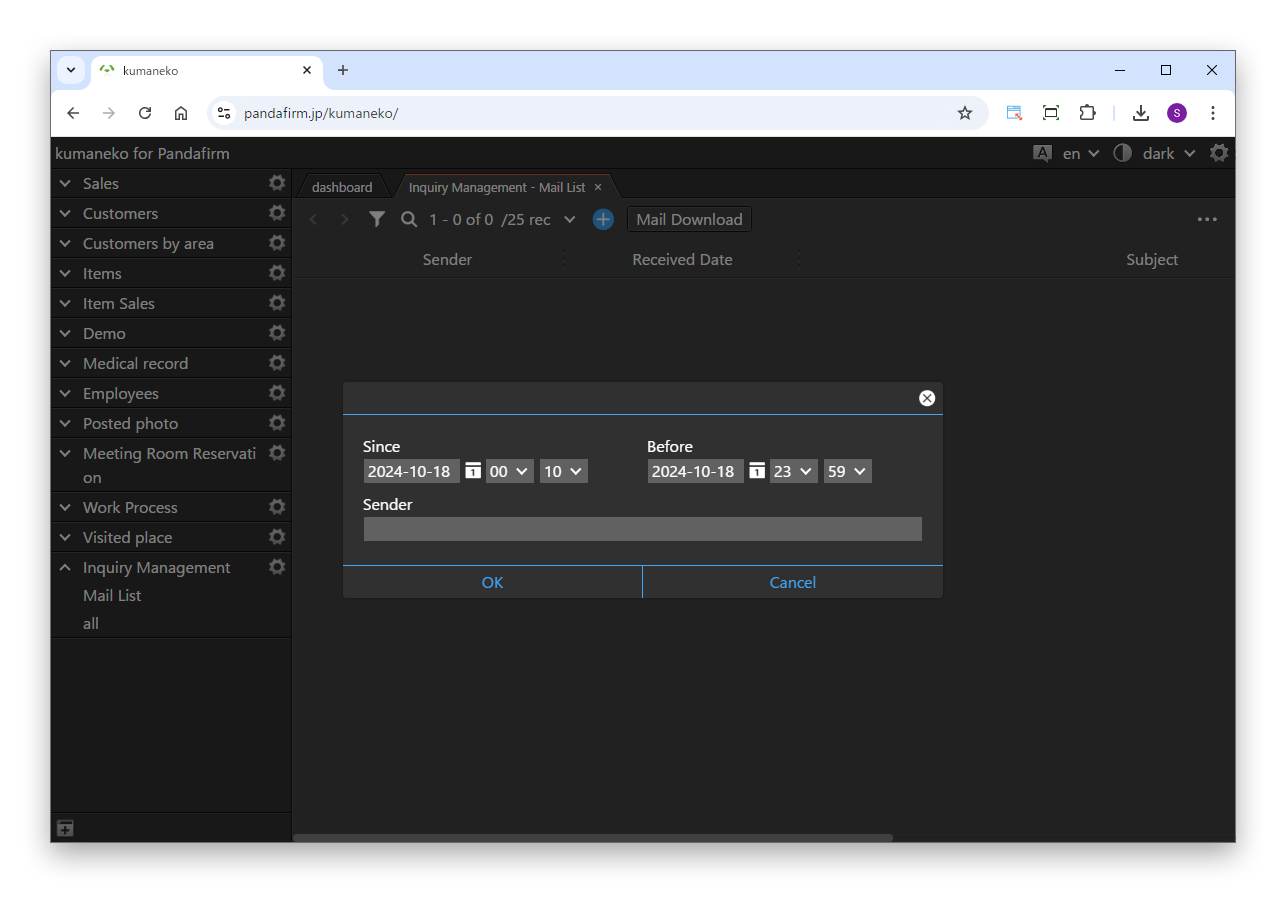
Click the button, and a screen for entering the period and sender appears. Specify the period and sender and click "OK" to import the email. By default, the period is from 0:00 to 23:59 today.
If you leave the sender empty, all email in the specified period is imported.
The plugin does not check whether email has already been imported. Importing the same period again registers the same email twice. Setting deduplication on the email ID field prevents duplicates, but if even one already imported email is included, the whole import is canceled.
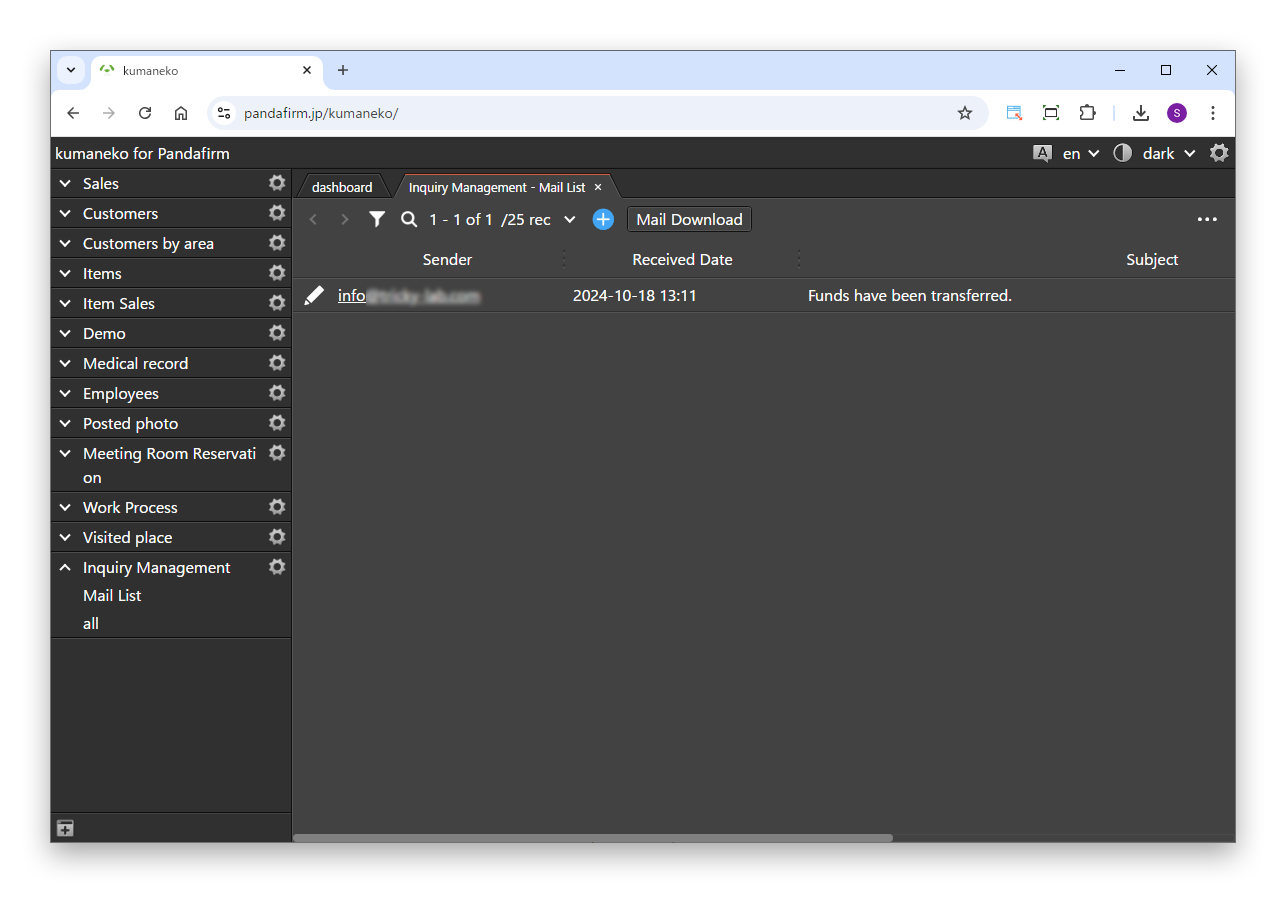
When the import finishes, the email contents are stored in the fields specified on the settings screen and appear in the list as records.
When imported email is saved, actions by value change are also run.